

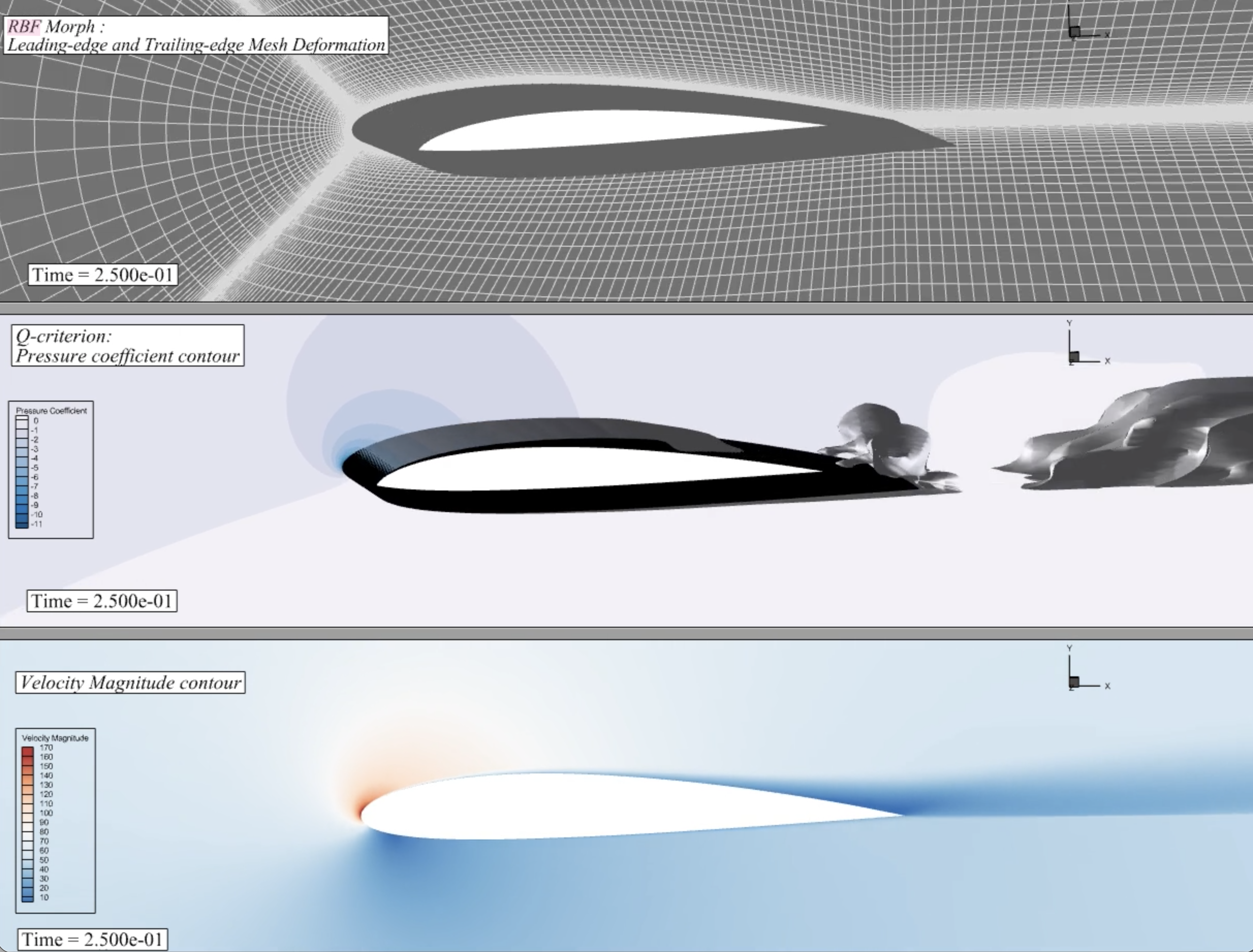
RBF Morph is proud to support innovative research exploring the next generation of aircraft design through morphing wing technology.
In collaboration with Kingston University and PhD researcher Muram Abbadi, this project investigates how flexible wing structures can adapt their shape across different flight conditions to optimise aerodynamic performance. The concept draws inspiration from the wing-warping principle, reimagined using advanced computational tools and modern engineering approaches.
By leveraging RBF Morph’s mesh morphing technology within simulation environments, the research combines computational fluid dynamics (CFD) with wind tunnel validation. Early results demonstrate significant potential, including up to a 15% reduction in drag and an average 12% increase in lift. These improvements can translate directly into enhanced aerodynamic efficiency, with meaningful reductions in fuel consumption and emissions for future civil aircraft.
The project also highlights the value of strong collaboration between academia and industry. Support from Air Charter Service has played an important role in enabling the research, reflecting a shared commitment to advancing sustainability in aviation.
Looking ahead, the next phase will focus on physical testing of the morphing wing, bringing the concept closer to real-world application. This work represents an important step toward integrating adaptive structures into future aircraft design and underscores the role of simulation-driven innovation in shaping a more efficient and sustainable aviation industry.
You can read the full press release here.